Flat Roof Repair & Replacement in Reading, MA
Flat and low-slope roofs are common on triple-deckers, porches, additions, and dormers. They need different materials than shingle roofs, usually rubber (EPDM), TPO, PVC, or modified bitumen. We connect you with independent local roofers who work on low-slope roofs.
Reading homes at a glance
Source: U.S. Census Bureau, American Community Survey 2020–2024 5-year estimates, via Census Reporter.
What that means for flat roofs in Reading
About 71% of Reading homes are single-family detached, so flat roofs here are most often over porches, additions, and dormers. About 51% of homes in Reading were built before 1960, and the median home was built around 1960.
The state code sets a minimum flat-roof snow load of 30 psf for Reading, and flat roofs do not shed snow the way pitched roofs do. Drifts against walls and parapets, and clogged drains that refreeze, are what most often cause trouble.
About Reading
The state building code lists Reading at a 50 psf ground snow load and a 118 mph basic design wind speed, among the higher snow figures in the communities we cover.
Reading is a mostly single-family, owner-occupied town, so most roofing projects here are individual houses.
Signs to watch for
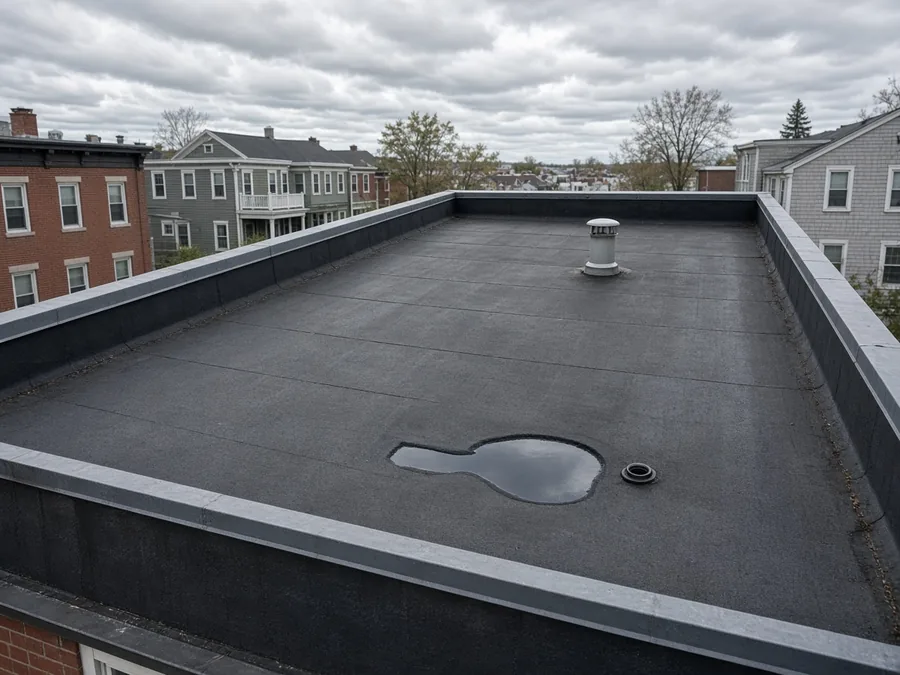
- Standing water that stays for days after rain
- Blisters, cracks, or seams pulling apart
- Leaks below a porch roof, addition, or dormer
- Flashing pulling away at a wall or parapet
What the work typically involves
- Inspect the membrane and drainage. Ponding water, clogged drains or scuppers, and failed seams are the usual causes of flat-roof leaks.
- Repair or replace. Small failures can be patched. Widespread cracking or wet insulation usually means replacement.
- Choose the system. EPDM, TPO, PVC, and modified bitumen each have pros and cons. Ask the roofer why they recommend one.
- Detail the edges. Most flat-roof leaks start at edges, walls, and penetrations, so flashing work matters.
Helpful resources: Mass.gov: Home Improvement Contractor resources · 780 CMR 10th ed., Chapter 16 (Table 1604.11 snow and wind by town)
Why roof leaks and ice dams matter
Ice dams and roof leaks can push water into ceilings, insulation, and wall cavities, and wet attics are a common place for mold. Roofing experts recommend inspecting your roof in spring, fall, and after big storms.
Sources: UMass Building & Construction Technology: Preventing Ice Dams · U.S. DOE Building America Solution Center: Attic Air Sealing, Insulating and Ventilating for Ice Dam Prevention · EPA: A Brief Guide to Mold, Moisture and Your Home · NRCA: Consumer Information
Flat Roofs in Reading: FAQ
What does flat roof replacement cost in Reading?
It depends on size, access, the number of layers to remove, insulation, and the membrane chosen. Get a written quote with line items. We do not set or guarantee prices.
Do I need a permit to replace a roof in Reading?
Yes. The state's Home Improvement Contractor guidance lists new or replacement roofing as requiring a building permit, a Construction Supervisor License, and HIC registration. Minor repairs may also need a permit unless the Reading building official considers them ordinary repairs. Your roofer usually pulls the permit; confirm that in writing.
Is a flat roof really flat?
Not quite. Low-slope roofs should have a slight pitch toward drains, scuppers, or gutters so water does not pond.
How do snow loads affect flat roofs?
Flat roofs do not shed snow the way pitched roofs do. The Massachusetts building code sets a minimum flat-roof snow load of 30 psf for the communities we cover. If you are worried about heavy snow on a flat roof, contact a professional rather than climbing up yourself.