Slate Roof Repair on the North Shore
Natural slate can last far longer than asphalt, and a slate roof with failing flashing or a few broken slates is often worth repairing rather than replacing. Slate is a specialty, so we connect you with independent local roofers who work on slate.
Why roof leaks and ice dams matter
Small roof problems are easy to miss from the ground, and water that gets past the roof usually does its damage out of sight.
Ice dams push water under shingles
Heat escaping from the living space warms the roof, melting snow that refreezes at the colder eaves. The ice ridge traps meltwater, which can back up under shingles and into the house.(UMass Building & Construction Technology: Preventing Ice Dams, U.S. DOE Building America Solution Center: Attic Air Sealing, Insulating and Ventilating for Ice Dam Prevention)
Leaks damage ceilings, walls, and insulation
Water from ice dams and leaks can stain ceilings, soak and compress insulation so it works less well, and rot framing inside wall cavities.(UMass Building & Construction Technology: Preventing Ice Dams)
Wet attics grow mold
Roof leaks are one of the moisture problems that lead to mold indoors. The EPA advises fixing leaks and drying wet materials within 24 to 48 hours to help prevent mold growth.(EPA: A Brief Guide to Mold, Moisture and Your Home, UMass Building & Construction Technology: Preventing Ice Dams)
Regular inspections catch problems early
The National Roofing Contractors Association recommends inspecting your roof at least twice a year, in spring and fall, and after severe storms. You can check from the ground, and leave walking on the roof to professionals.(NRCA: Consumer Information)
Signs you may need help
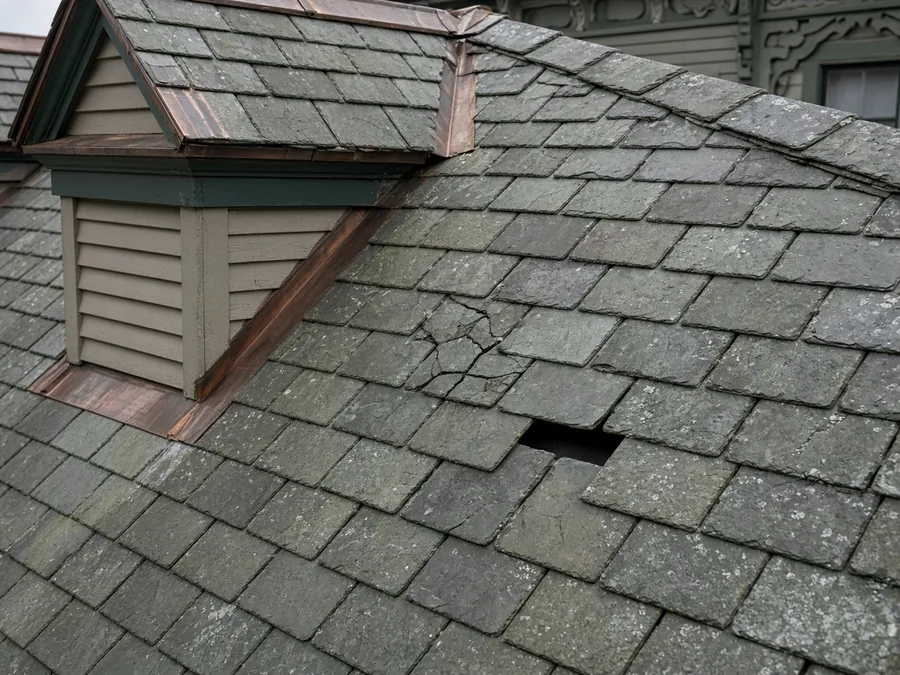
- Cracked, broken, or slipped slates
- Slates on the ground or in the gutters
- Leaks around chimneys, valleys, or dormers
- Rusted nails or flashing
What the work typically involves
- Assess the slate. A slate roofer checks whether the slate itself is still sound or is flaking and soft.
- Replace individual slates. Broken slates are removed and replaced with matching slate, typically held with copper nails or slate hooks.
- Re-flash. Valley and chimney flashing often wears out before the slate does and can be replaced.
- Walk carefully. Slate cracks under careless foot traffic, so experienced slate roofers use ladders and hooks rather than walking the roof.
Every job is different. The pro you speak with will explain their own approach and pricing. North Shore Roofing Pros does not perform, supervise, or guarantee any work.
Further reading: Mass.gov: Home Improvement Contractor resources · Massachusetts building code, Chapter 16 (snow and wind tables)
Frequently asked questions
Is it worth repairing an old slate roof?
Often, yes. If most slates are sound, replacing broken slates and worn flashing can extend the roof's life significantly. A slate specialist can tell you whether the slate itself is nearing the end.
Can any roofer repair slate?
Slate requires different tools and techniques than asphalt shingles. Ask how many slate jobs they have done and for references.
Can I replace slate with asphalt shingles?
Yes, but it changes the look of the house, and in local historic districts there may be extra review. Check with your town before you plan the change.
What causes ice dams?
Ice dams form when heat escaping from the house warms the roof deck and melts snow, which then refreezes at the colder eaves. UMass and the U.S. Department of Energy point to attic air sealing, enough insulation, and roof ventilation as the long-term fixes.
How often should I have my roof inspected?
The National Roofing Contractors Association recommends checking your roof at least twice a year, in the spring and fall, and after any severe weather. Look from the ground with binoculars if you can, and leave climbing on the roof to a professional.
Can a roof leak cause mold?
Yes. The EPA lists roof leaks among the moisture problems that lead to mold. Fixing the leak and drying wet materials within 24 to 48 hours helps prevent mold from growing.