Flat Roof Repair & Replacement on the North Shore
Flat and low-slope roofs are common on triple-deckers, porches, additions, and dormers. They need different materials than shingle roofs, usually rubber (EPDM), TPO, PVC, or modified bitumen. We connect you with independent local roofers who work on low-slope roofs.
Why roof leaks and ice dams matter
Small roof problems are easy to miss from the ground, and water that gets past the roof usually does its damage out of sight.
Ice dams push water under shingles
Heat escaping from the living space warms the roof, melting snow that refreezes at the colder eaves. The ice ridge traps meltwater, which can back up under shingles and into the house.(UMass Building & Construction Technology: Preventing Ice Dams, U.S. DOE Building America Solution Center: Attic Air Sealing, Insulating and Ventilating for Ice Dam Prevention)
Leaks damage ceilings, walls, and insulation
Water from ice dams and leaks can stain ceilings, soak and compress insulation so it works less well, and rot framing inside wall cavities.(UMass Building & Construction Technology: Preventing Ice Dams)
Wet attics grow mold
Roof leaks are one of the moisture problems that lead to mold indoors. The EPA advises fixing leaks and drying wet materials within 24 to 48 hours to help prevent mold growth.(EPA: A Brief Guide to Mold, Moisture and Your Home, UMass Building & Construction Technology: Preventing Ice Dams)
Regular inspections catch problems early
The National Roofing Contractors Association recommends inspecting your roof at least twice a year, in spring and fall, and after severe storms. You can check from the ground, and leave walking on the roof to professionals.(NRCA: Consumer Information)
Signs you may need help
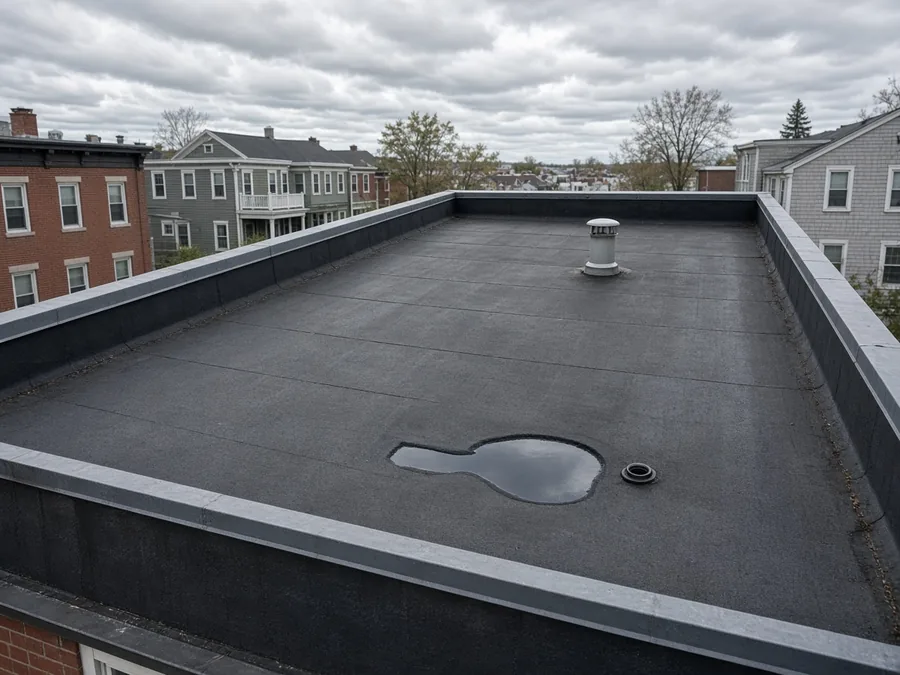
- Standing water that stays for days after rain
- Blisters, cracks, or seams pulling apart
- Leaks below a porch roof, addition, or dormer
- Flashing pulling away at a wall or parapet
What the work typically involves
- Inspect the membrane and drainage. Ponding water, clogged drains or scuppers, and failed seams are the usual causes of flat-roof leaks.
- Repair or replace. Small failures can be patched. Widespread cracking or wet insulation usually means replacement.
- Choose the system. EPDM, TPO, PVC, and modified bitumen each have pros and cons. Ask the roofer why they recommend one.
- Detail the edges. Most flat-roof leaks start at edges, walls, and penetrations, so flashing work matters.
Every job is different. The pro you speak with will explain their own approach and pricing. North Shore Roofing Pros does not perform, supervise, or guarantee any work.
Further reading: Mass.gov: Home Improvement Contractor resources · Massachusetts building code, Chapter 16 (snow and wind tables)
Frequently asked questions
Is a flat roof really flat?
Not quite. Low-slope roofs should have a slight pitch toward drains, scuppers, or gutters so water does not pond.
How do snow loads affect flat roofs?
Flat roofs do not shed snow the way pitched roofs do. The Massachusetts building code sets a minimum flat-roof snow load of 30 psf for the communities we cover. If you are worried about heavy snow on a flat roof, contact a professional rather than climbing up yourself.
Can a flat roof be walked on?
Only if it is designed for it. Membrane roofs can be punctured by foot traffic and furniture; ask about walkway pads or a deck system.
What causes ice dams?
Ice dams form when heat escaping from the house warms the roof deck and melts snow, which then refreezes at the colder eaves. UMass and the U.S. Department of Energy point to attic air sealing, enough insulation, and roof ventilation as the long-term fixes.
How often should I have my roof inspected?
The National Roofing Contractors Association recommends checking your roof at least twice a year, in the spring and fall, and after any severe weather. Look from the ground with binoculars if you can, and leave climbing on the roof to a professional.
Can a roof leak cause mold?
Yes. The EPA lists roof leaks among the moisture problems that lead to mold. Fixing the leak and drying wet materials within 24 to 48 hours helps prevent mold from growing.