Roof Repair in Wakefield, MA
Most leaks start at a detail rather than in the middle of the roof: flashing around a chimney, a vent boot, a valley, or the eaves where ice dams form. We connect North Shore homeowners with independent local roofers who can find the source and give you a written repair price.
Wakefield homes at a glance
Source: U.S. Census Bureau, American Community Survey 2020–2024 5-year estimates, via Census Reporter.
What that means for roof repair in Wakefield
About 57% of homes in Wakefield were built before 1960, and the median home was built around 1956. Mid-century homes have often been reroofed at least once, so it helps to know how many layers are on the roof before deciding between repair and replacement.
With a 50 psf ground snow load in the state code for Wakefield, winter is when weak flashing and ice-dam leaks tend to show up. Many repair calls come during or right after snowmelt, when water backs up under shingles at the eaves.
About Wakefield
The state building code lists Wakefield at a 50 psf ground snow load and a 118 mph basic design wind speed, among the higher snow figures in the communities we cover.
Wakefield is built around Lake Quannapowitt, and about a third of its homes were built before 1940, so older roofs with dormers, chimneys, and porch roofs are common.
Signs to watch for
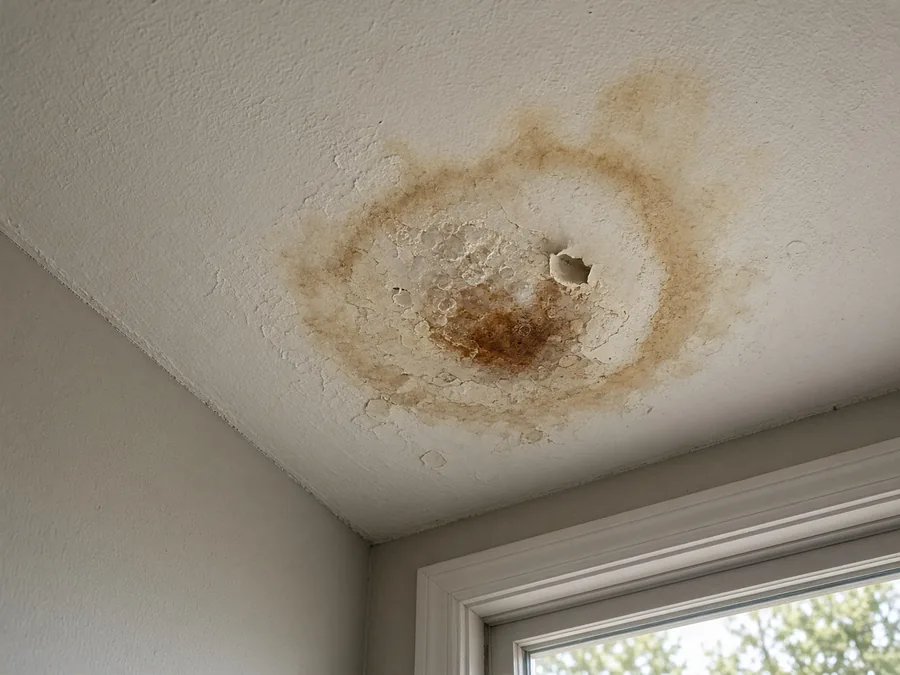
- Water stains on a ceiling or in the attic after rain or snowmelt
- Missing, cracked, or curling shingles
- Loose or rusted flashing around a chimney, skylight, or wall
- Granules from asphalt shingles collecting in gutters
- Ice dams along the eaves in winter
What the work typically involves
- Inspect inside and out. A roofer checks the attic for stains and daylight, then the roof surface, flashing, valleys, and vents.
- Find the actual source. Water can travel along framing before it drips, so the stain on your ceiling may be several feet from the leak.
- Repair and seal. Typical repairs include replacing damaged shingles, re-flashing a chimney or wall, or replacing a cracked vent boot.
- Written scope and photos. Ask for before-and-after photos and a written description of what was repaired.
Helpful resources: Mass.gov: Home Improvement Contractor resources · 780 CMR 10th ed., Chapter 16 (Table 1604.11 snow and wind by town)
Why roof leaks and ice dams matter
Ice dams and roof leaks can push water into ceilings, insulation, and wall cavities, and wet attics are a common place for mold. Roofing experts recommend inspecting your roof in spring, fall, and after big storms.
Sources: UMass Building & Construction Technology: Preventing Ice Dams · U.S. DOE Building America Solution Center: Attic Air Sealing, Insulating and Ventilating for Ice Dam Prevention · EPA: A Brief Guide to Mold, Moisture and Your Home · NRCA: Consumer Information
Roof Repair in Wakefield: FAQ
How quickly can a roofer look at a leak in Wakefield?
It depends on the roofer's schedule and the weather. After big storms, demand spikes. When you submit a request, we pass it along to an independent local roofer who serves Wakefield, and they contact you directly to schedule.
Should I get my roof raked after a big snowstorm in Wakefield?
Removing snow from the lower edge with a roof rake from the ground can reduce ice dams. Do not climb onto a snowy roof. If you see sagging, cracking sounds, or doors that suddenly stick, leave the area and contact a professional.
Repair or replace?
A localized leak on a roof with plenty of life left is usually a repair. Widespread curling, granule loss, multiple leaks, or a roof near the end of its expected life often makes replacement the better value. Ask the roofer to explain why.
What causes ice dams?
Heat escaping into the attic melts snow on the roof. The water runs down and refreezes at the colder eaves, building a ridge of ice that can back water up under shingles. Air sealing and attic insulation and ventilation address the cause; an ice and water barrier at the eaves limits damage.